
Unweaving Reality 01
境界線というフィクション
1 / 7
In 2021, I visited Watari for the first time on a research trip. Around dusk,
I sat on the gradually darkening beach of Arahama, watching the horizon where
the sea met the clouds drifting in from the Abukuma Mountains across the vast
plains. The weather was unfortunate; the heavy, gray clouds looked as though
they could no longer bear their own weight and might drop their rain at any
moment. Suddenly, it occurred to me that the water forming these clouds might
have once been the sea, and that it would eventually return to the sea. I
chose Kobe—which, like Watari, has both mountains and a sea and has
experienced an earthquake, and is also my hometown—as a comparative research
subject for this project. The idea was that looking at things relatively would
yield a broader, bird's-eye perspective. Viewed from the steep slopes at the
foot of Mount Rokko, the boundaries between the sea, the clouds, and the
atmosphere melted together, feeling like a single, unified "something." There
are mountains, there are clouds, there is the sea, and in between lies the
town where plants, animals, and people live. Watari and Kobe may look
different, but in the grand scheme, they are not vastly dissimilar. This was
not just a visual observation, but a physical sensation I felt when placing my
body in that environment. Everything equally contains water; there appear to
be boundaries, yet everything is gently connected. We turn the faucet and
drink the water that comes out. That water becomes our blood, circulates
throughout our bodies, and is eventually excreted as urine. That urine flows
through sewer pipes into rivers and oceans, is warmed at the water's surface,
and forms clouds. Those clouds are welcomed by some unknown mountain, turn
into rain, flow down a river, and enter someone else's body again. What was
not me becomes me, what was me becomes nature, and what was me exists within
someone else.
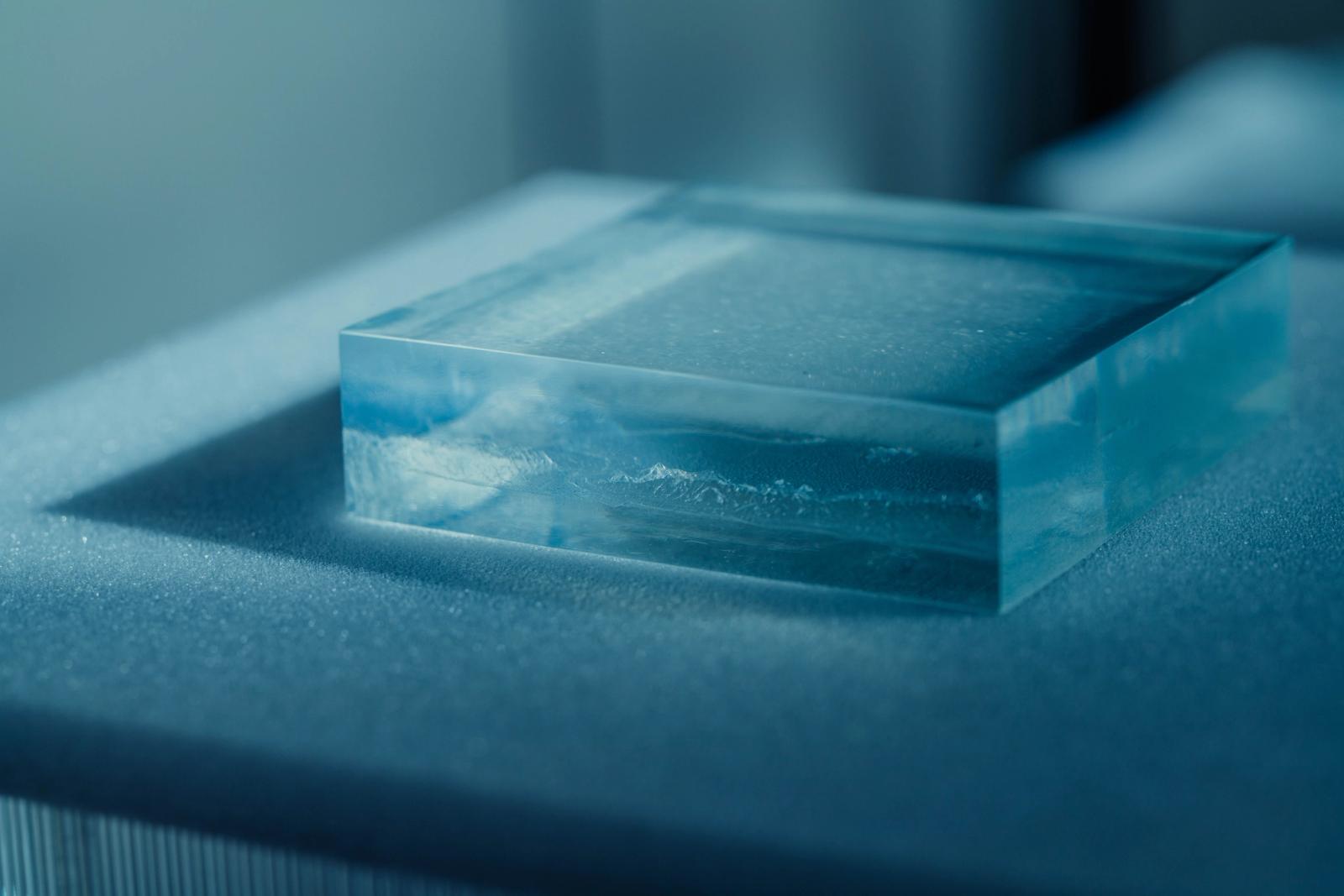
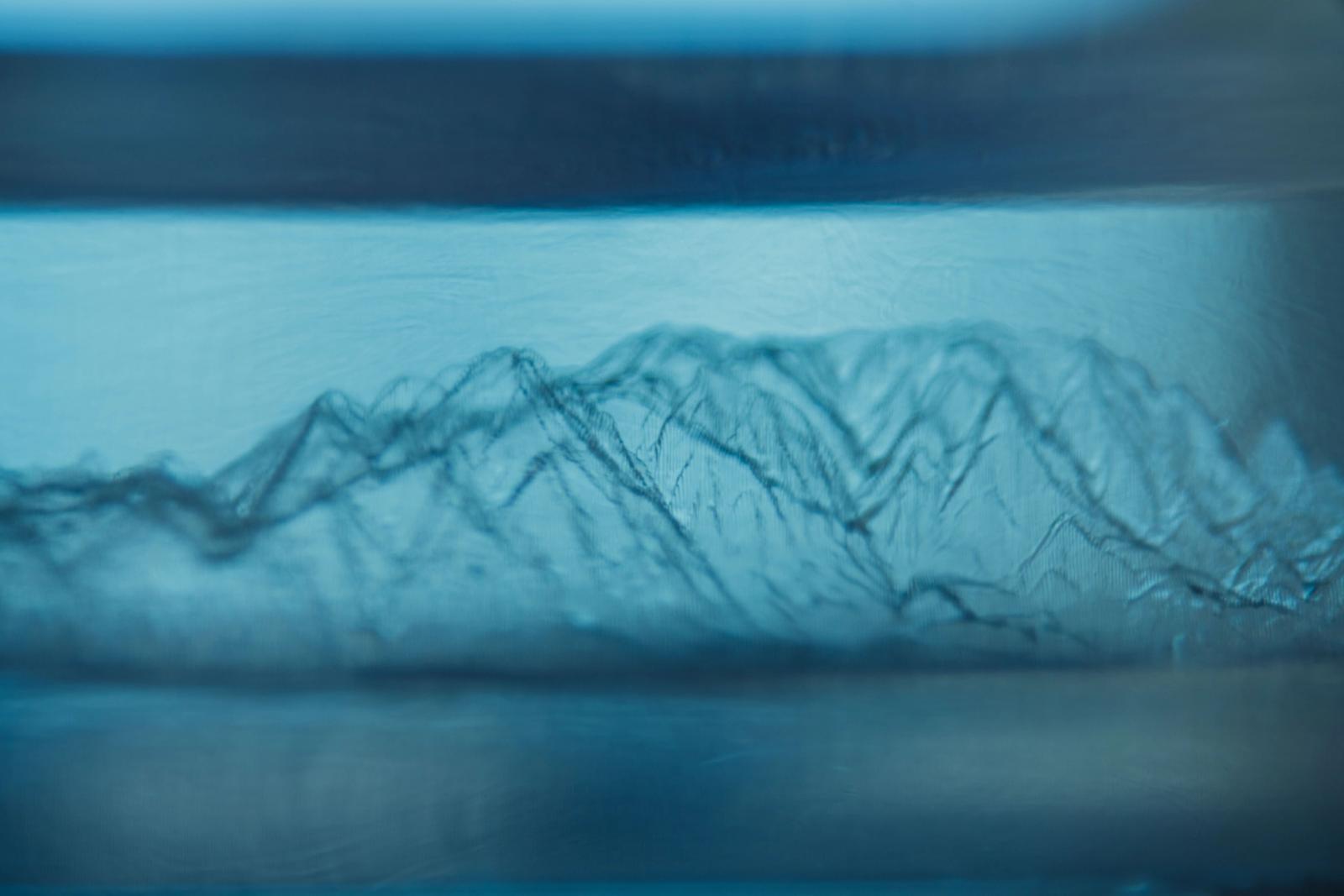
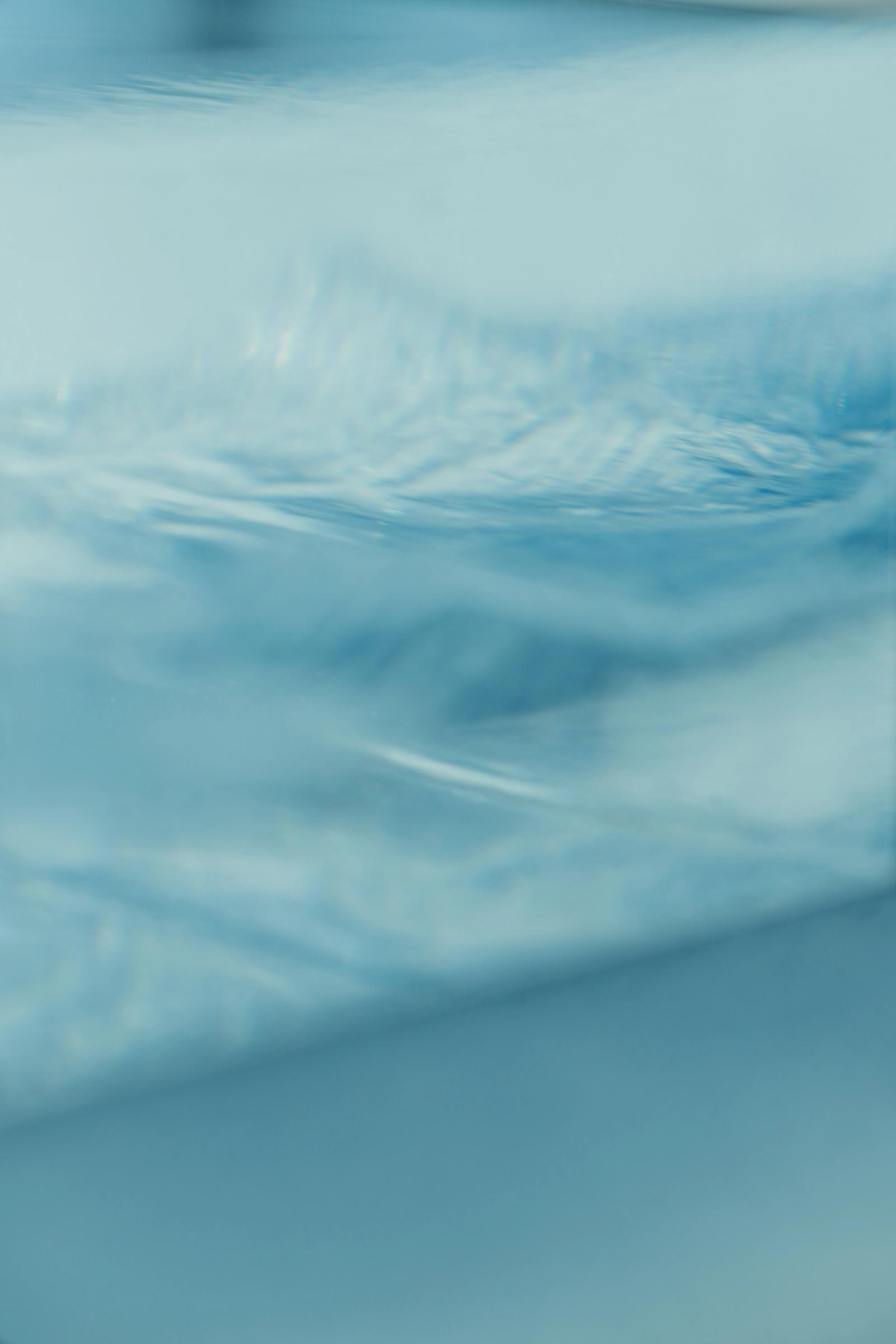
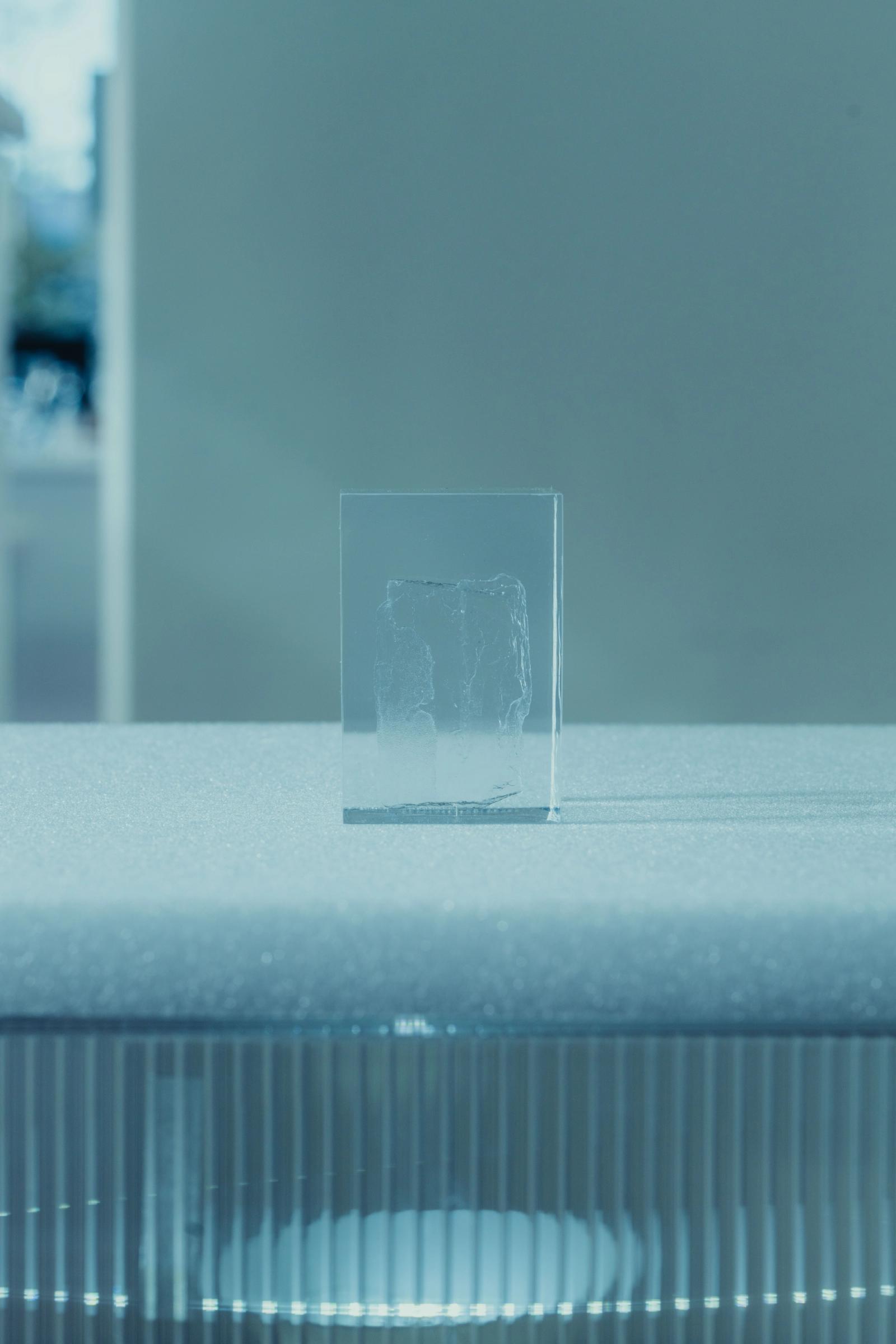
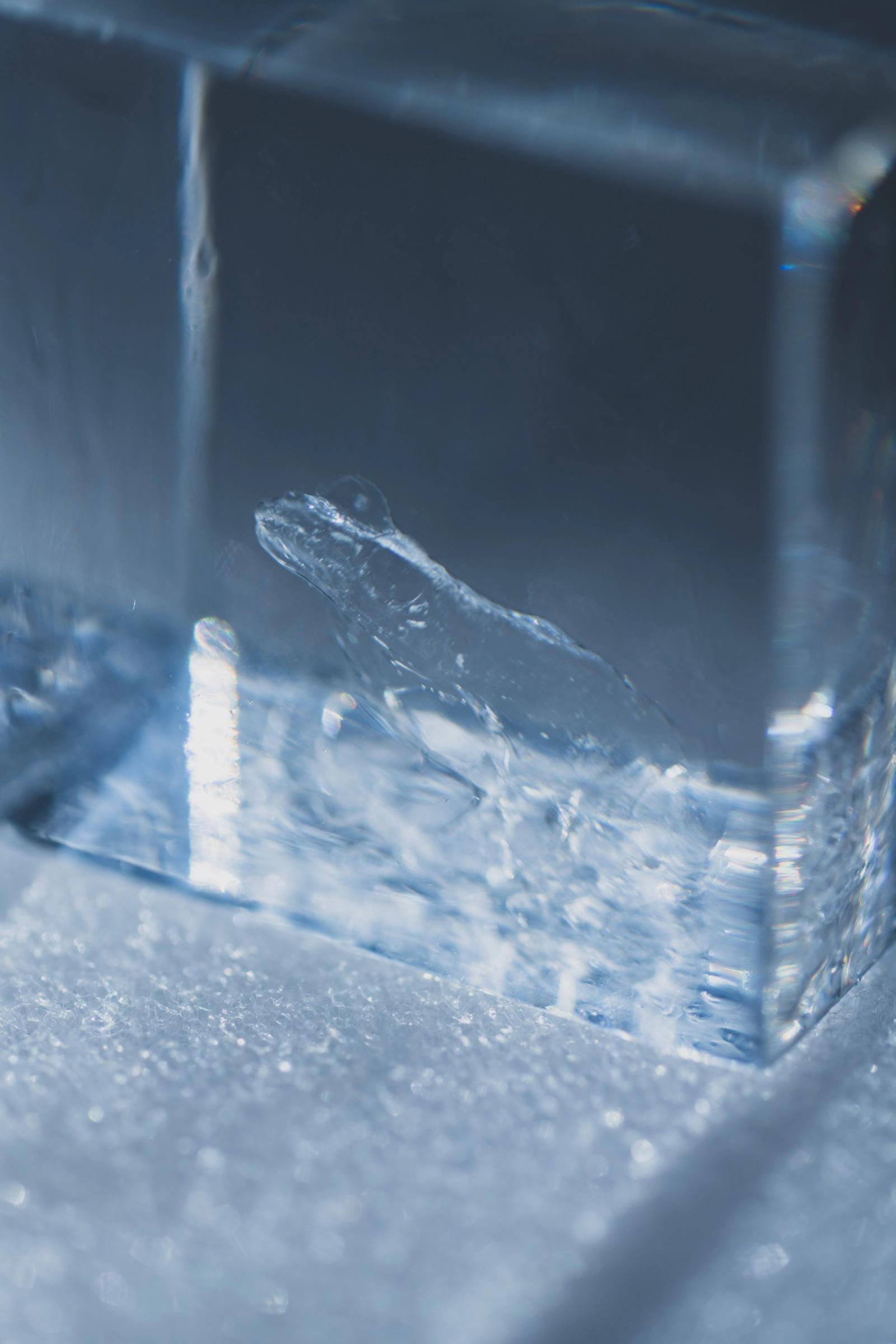
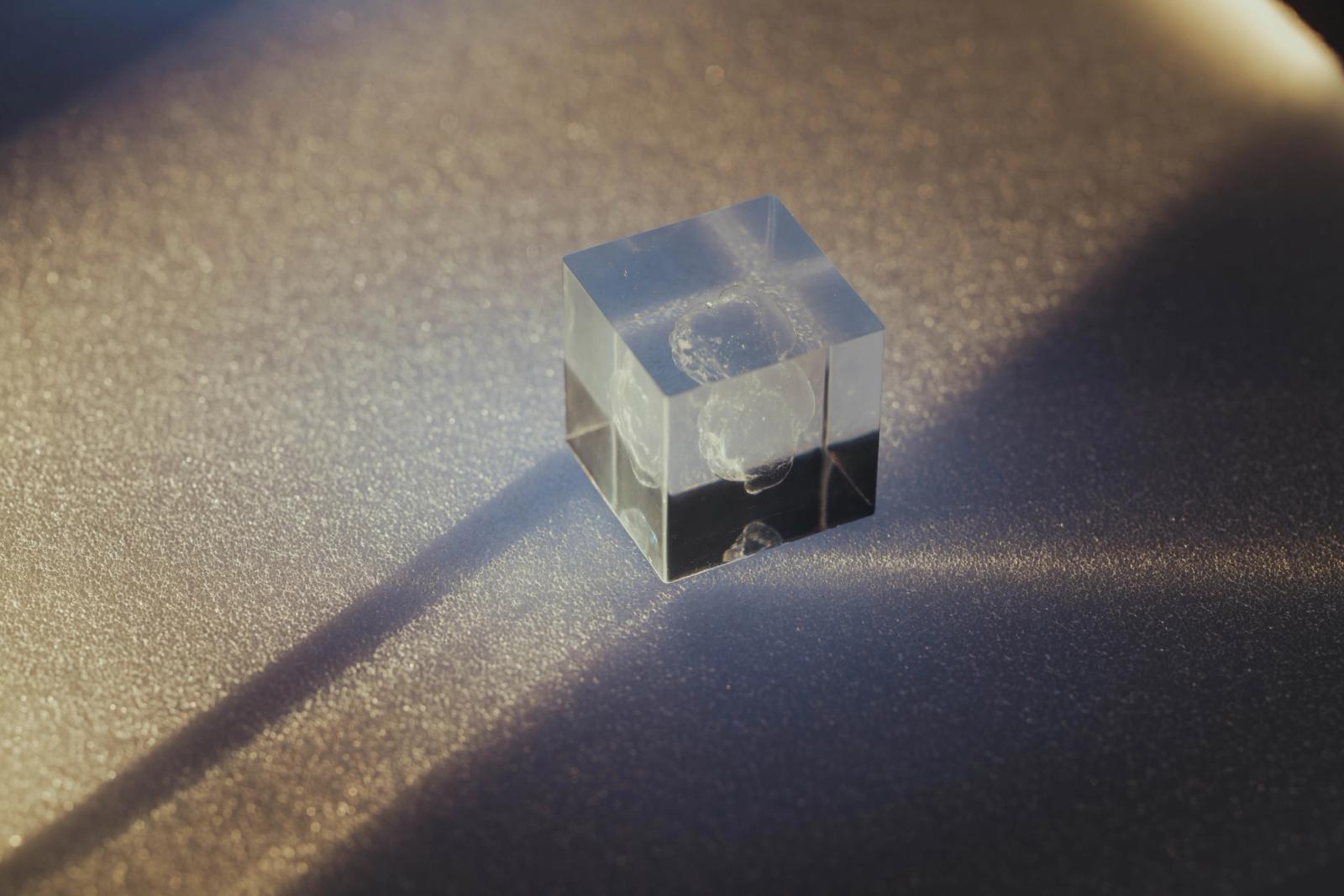
This happened while I was creating the KEIKA BOOK (2024), a record of life in Watari. Having never particularly worked with clear resin in my previous artistic endeavors, I was struggling with the production. I had chosen this material to crystallize nearly a year's worth of illustrated diaries into a single object. However, when I poured the same resin in multiple batches, layers formed with each pour, preventing it from looking like a single, solid block. Whether the resin wasn't mixed thoroughly or the components settled while waiting to cure, there was surely a clear reason, but complete integration was impossible, forcing me to alter my original plan. Yet, looking at the exquisite, unexpected margins that appeared before my eyes, I was genuinely moved. "How mysterious. What beautiful lines," I thought. I felt a certain conviction that I had witnessed a kind of "truth" in that phenomenon.
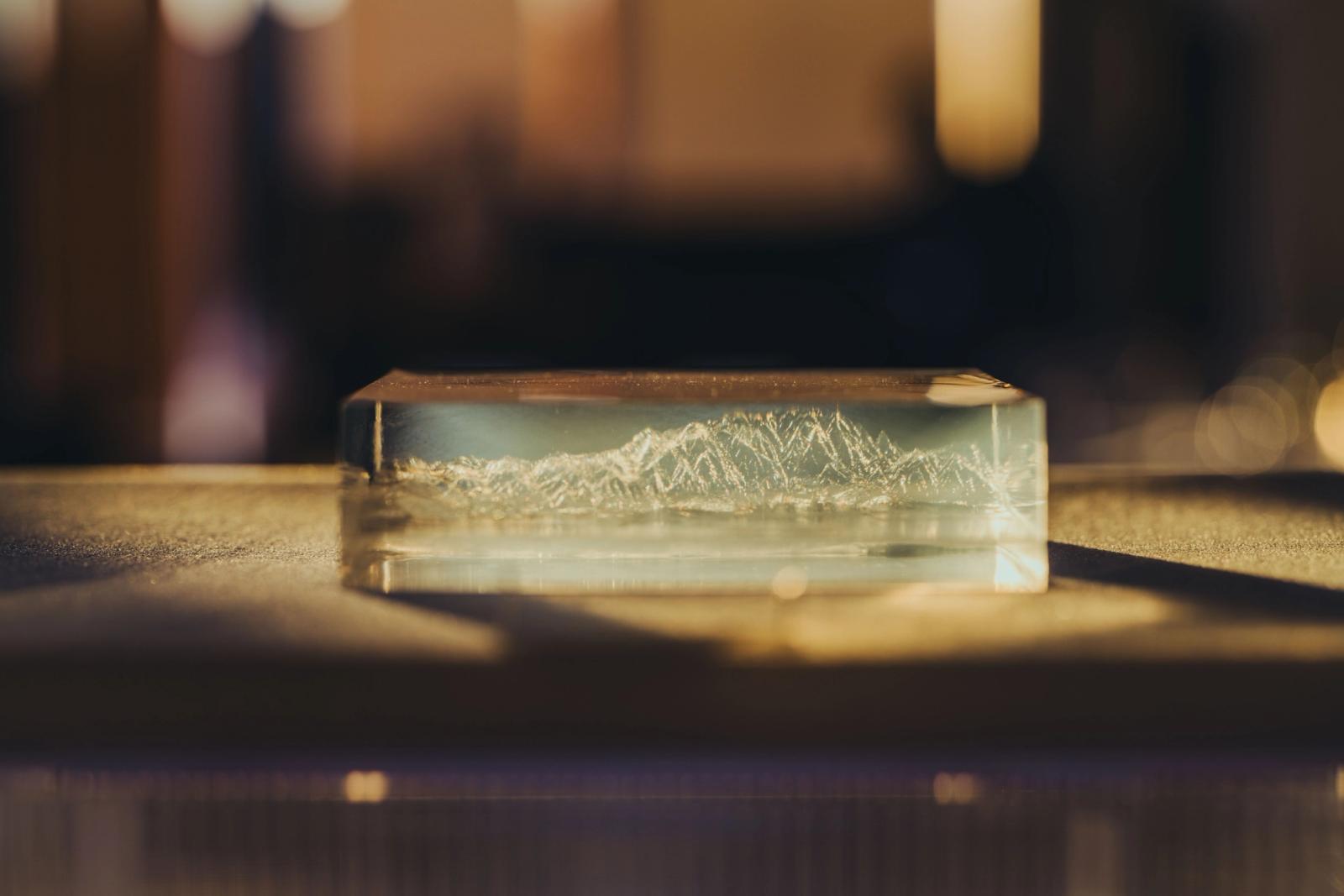
To understand Watari and Kobe more deeply, I 3D-printed topographic maps published by the Geospatial Information Authority of Japan, overlaying the landscapes I had seen with the undulations of the terrain. When the map became three-dimensional, the flatness of Watari, which I had already felt in my bones, struck me with even greater intensity. The stronger that impression grew, the more the approximately 14-meter-high seawall along the coast felt as though it was drawing a very clear boundary line between nature and the human world. To feel that artificial line on my skin, I decided to actually stand on top of the seawall. Surprisingly, perhaps due to a sense of scale so overwhelming it surpassed my own physical body, my impression was not that a boundary line had been drawn, but rather that a different relationship had been overwritten, creating an entirely new topography. The boundary between Watari and Iwanuma is demarcated by the Abukuma River, but considering how the river's shape has changed due to repeated flooding, artificial divisions are ambiguous. Similarly, in the sea of Kobe, located in the Seto Inland Sea, there are two large artificial islands. One of them, Port Island—the world's largest artificial island—was built on an artificial foundation with an initiative to bury power lines underground, a rarity at the time. On a map, it is depicted just like the original landmass, and even when you actually visit it, it is intuitively difficult to comprehend that the place used to be the sea. Whether something is a natural object or an artificial one, once the scale becomes large enough, the boundary between them becomes indistinguishable to our physical senses.
Whether we are conscious of it or not, we live our lives sensing all kinds of boundaries. According to the concept of "Umwelt" proposed by the biologist Jakob von Uexküll, all animals live with a perceptual world unique to their species and act based upon it. In other words, while humans perceive the world based on information gathered through our five senses, ticks, which have no vision, or whales, whose sense of smell has largely degenerated, grasp the world in entirely different ways. It is not that one species is superior; they simply recognize the world in their own ways. Even so, a distinct characteristic of humans, as Uexküll also pointed out, is our ability to transcend the limits of our own cognition through imagination. We can expand our imagination, knowing it is a fact that neutrinos pass right through our bodies, or guessing that bats might perceive sound as if it were a physical wall. We try to simulate the world lived in by insects that can see ultraviolet light through the use of photographs. In this way, although we cannot actually experience it, we can use our imagination to deconstruct the reality of the world we perceive and challenge ourselves to grasp the world in a different way. All matter in this world is made up of atoms. Furthermore, those atoms are made up of elementary particles: protons, electrons, and neutrons. These particles bond electrically while maintaining a certain distance from one another. Simply put, they are merely gathered together, not perfectly attached. Both the stone rolling in front of me and my own body can be described as "dense zones of energy" gathered in a certain place within a vastly expanding space. There are no clear boundaries drawn there, only differences in density, and our reality merely recognizes them as distinct entities.
Conceptual lines created through human imagination, like prefectural borders drawn for administration or national borders to indicate ownership. The physical boundaries I feel between myself and biological or non-biological entities. When you untangle all these lines, you are filled with a refreshing feeling through a mysterious sense of unity. What was spoken of in the Buddhist philosophy of "Consciousness-Only" (Yogacara) over 1500 years ago is now being unraveled by quantum theory in the scientific world. No matter where you live, you are connected to the world, and by rewriting your own consciousness, you can touch a new kind of beauty.
January 2025, Eiji Uozumi
I sat on the gradually darkening beach of Arahama, watching the horizon where
the sea met the clouds drifting in from the Abukuma Mountains across the vast
plains. The weather was unfortunate; the heavy, gray clouds looked as though
they could no longer bear their own weight and might drop their rain at any
moment. Suddenly, it occurred to me that the water forming these clouds might
have once been the sea, and that it would eventually return to the sea. I
chose Kobe—which, like Watari, has both mountains and a sea and has
experienced an earthquake, and is also my hometown—as a comparative research
subject for this project. The idea was that looking at things relatively would
yield a broader, bird's-eye perspective. Viewed from the steep slopes at the
foot of Mount Rokko, the boundaries between the sea, the clouds, and the
atmosphere melted together, feeling like a single, unified "something." There
are mountains, there are clouds, there is the sea, and in between lies the
town where plants, animals, and people live. Watari and Kobe may look
different, but in the grand scheme, they are not vastly dissimilar. This was
not just a visual observation, but a physical sensation I felt when placing my
body in that environment. Everything equally contains water; there appear to
be boundaries, yet everything is gently connected. We turn the faucet and
drink the water that comes out. That water becomes our blood, circulates
throughout our bodies, and is eventually excreted as urine. That urine flows
through sewer pipes into rivers and oceans, is warmed at the water's surface,
and forms clouds. Those clouds are welcomed by some unknown mountain, turn
into rain, flow down a river, and enter someone else's body again. What was
not me becomes me, what was me becomes nature, and what was me exists within
someone else.
This happened while I was creating the KEIKA BOOK (2024), a record of life in Watari. Having never particularly worked with clear resin in my previous artistic endeavors, I was struggling with the production. I had chosen this material to crystallize nearly a year's worth of illustrated diaries into a single object. However, when I poured the same resin in multiple batches, layers formed with each pour, preventing it from looking like a single, solid block. Whether the resin wasn't mixed thoroughly or the components settled while waiting to cure, there was surely a clear reason, but complete integration was impossible, forcing me to alter my original plan. Yet, looking at the exquisite, unexpected margins that appeared before my eyes, I was genuinely moved. "How mysterious. What beautiful lines," I thought. I felt a certain conviction that I had witnessed a kind of "truth" in that phenomenon.
To understand Watari and Kobe more deeply, I 3D-printed topographic maps published by the Geospatial Information Authority of Japan, overlaying the landscapes I had seen with the undulations of the terrain. When the map became three-dimensional, the flatness of Watari, which I had already felt in my bones, struck me with even greater intensity. The stronger that impression grew, the more the approximately 14-meter-high seawall along the coast felt as though it was drawing a very clear boundary line between nature and the human world. To feel that artificial line on my skin, I decided to actually stand on top of the seawall. Surprisingly, perhaps due to a sense of scale so overwhelming it surpassed my own physical body, my impression was not that a boundary line had been drawn, but rather that a different relationship had been overwritten, creating an entirely new topography. The boundary between Watari and Iwanuma is demarcated by the Abukuma River, but considering how the river's shape has changed due to repeated flooding, artificial divisions are ambiguous. Similarly, in the sea of Kobe, located in the Seto Inland Sea, there are two large artificial islands. One of them, Port Island—the world's largest artificial island—was built on an artificial foundation with an initiative to bury power lines underground, a rarity at the time. On a map, it is depicted just like the original landmass, and even when you actually visit it, it is intuitively difficult to comprehend that the place used to be the sea. Whether something is a natural object or an artificial one, once the scale becomes large enough, the boundary between them becomes indistinguishable to our physical senses.
Whether we are conscious of it or not, we live our lives sensing all kinds of boundaries. According to the concept of "Umwelt" proposed by the biologist Jakob von Uexküll, all animals live with a perceptual world unique to their species and act based upon it. In other words, while humans perceive the world based on information gathered through our five senses, ticks, which have no vision, or whales, whose sense of smell has largely degenerated, grasp the world in entirely different ways. It is not that one species is superior; they simply recognize the world in their own ways. Even so, a distinct characteristic of humans, as Uexküll also pointed out, is our ability to transcend the limits of our own cognition through imagination. We can expand our imagination, knowing it is a fact that neutrinos pass right through our bodies, or guessing that bats might perceive sound as if it were a physical wall. We try to simulate the world lived in by insects that can see ultraviolet light through the use of photographs. In this way, although we cannot actually experience it, we can use our imagination to deconstruct the reality of the world we perceive and challenge ourselves to grasp the world in a different way. All matter in this world is made up of atoms. Furthermore, those atoms are made up of elementary particles: protons, electrons, and neutrons. These particles bond electrically while maintaining a certain distance from one another. Simply put, they are merely gathered together, not perfectly attached. Both the stone rolling in front of me and my own body can be described as "dense zones of energy" gathered in a certain place within a vastly expanding space. There are no clear boundaries drawn there, only differences in density, and our reality merely recognizes them as distinct entities.
Conceptual lines created through human imagination, like prefectural borders drawn for administration or national borders to indicate ownership. The physical boundaries I feel between myself and biological or non-biological entities. When you untangle all these lines, you are filled with a refreshing feeling through a mysterious sense of unity. What was spoken of in the Buddhist philosophy of "Consciousness-Only" (Yogacara) over 1500 years ago is now being unraveled by quantum theory in the scientific world. No matter where you live, you are connected to the world, and by rewriting your own consciousness, you can touch a new kind of beauty.
January 2025, Eiji Uozumi
- Period
- 2025
- Work for
- 宮城県亘理町地域おこし協力隊事業 「ほどく-unweaving-」展示作品
- Location
- Miyagi, Japan
- Category
- Art Project
- Team
- Eiji Uozumi
- Material
- Resin
- Photo
- Junya Igarashi