
Watari ni Fune Information Hub
1 / 6
久保田さんの綴る、受動的であることの豊かさと、土地に「興される」という逆説的な美しさが込められた素晴らしいステートメントですね。
「地域おこし」という言葉の再解釈や、自己と風土が溶け合う感覚を大切に、展覧会や案内所の入り口に掲げるにふさわしい、格調高くも体温の宿る英語表現に翻訳しました。
On the Opening of the "Watari-ni-fune" Information Center
Three years have passed since we moved to Watari as members of the Local Revitalization Co-op. The Japanese term for revitalization, okosu, means to bring light to something hidden or to breathe new life into something that has faded. As newcomers to this unknown land, we have spent our days constantly questioning: what does it truly mean to "revitalize" a community through the act of creation?
Yet, remarkably, it did not take long for our "living" and "making" to merge into a single, flowing cycle. By simply walking through the town and following our intuition, we formed connections with people, objects, and places, which naturally led to the act of creation. These creations, in turn, guided us toward new encounters, leading back to making once more—a mysterious and beautiful circle. The time we spend thinking about Watari is no longer just for "work," "life," or "production." It has become a truly human time—a space to steady our breath and savor honest encounters with the world.
The reason these encounters brought such profound joy is perhaps because they were the exact opposite of how we typically "meet" things in the modern world. Unlike an active search where one sets a destination and moves efficiently according to a smartphone map, these were passive encounters—as if the world itself were coming toward us. One theory suggests the name "Watari" originates from the verb wataru (to cross), referring to crossing the Abukuma River. In a modern society that demands initiative, certainty, and planning, a small, unpredictable boat drifting in the current might be the truest form of "Watari"—a name that represents a dynamic state of "crossing." For us, struggling with how to approach creation as revitalization members, these experiences were truly Watari-ni-fune—the "perfect boat" appearing just when needed.
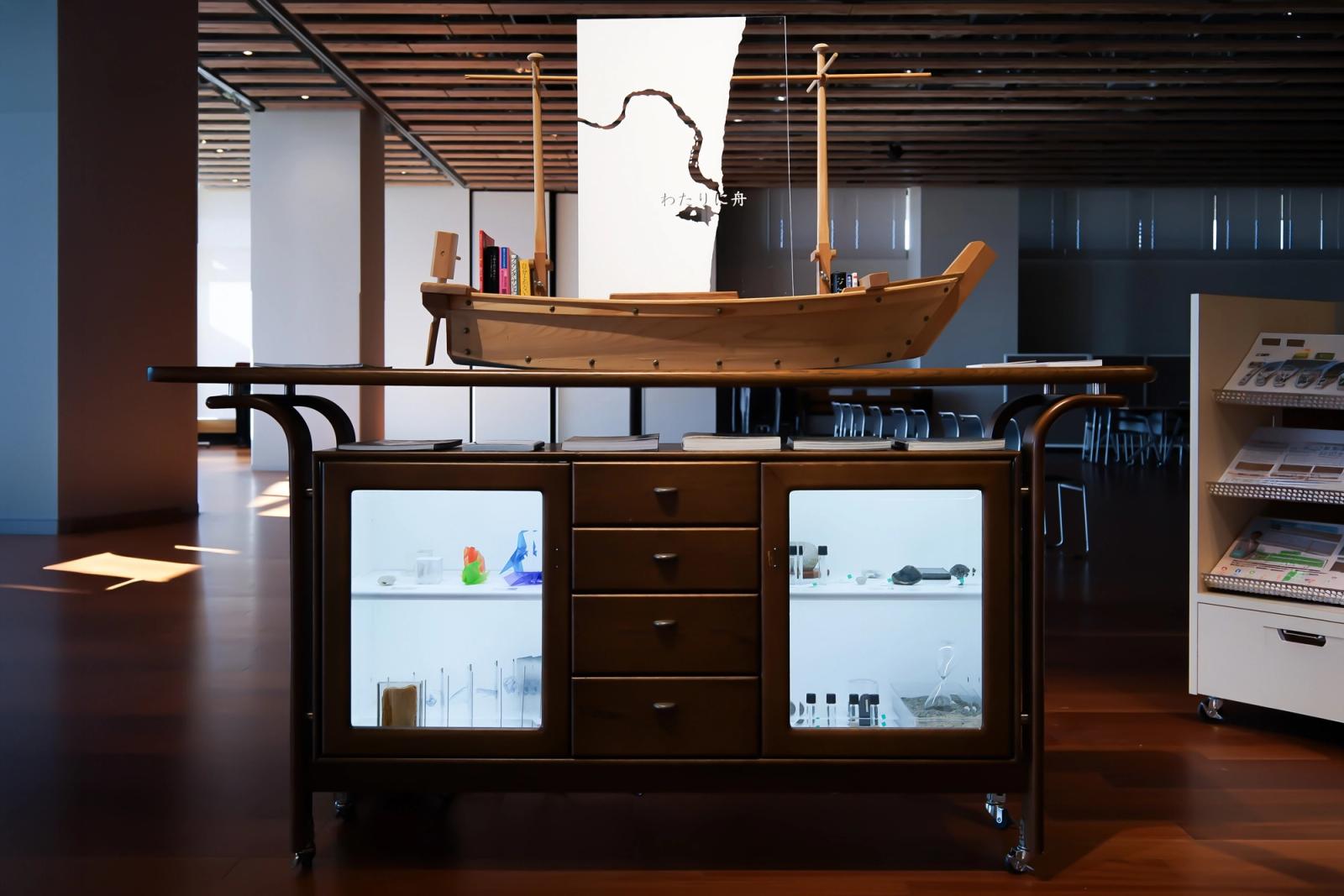
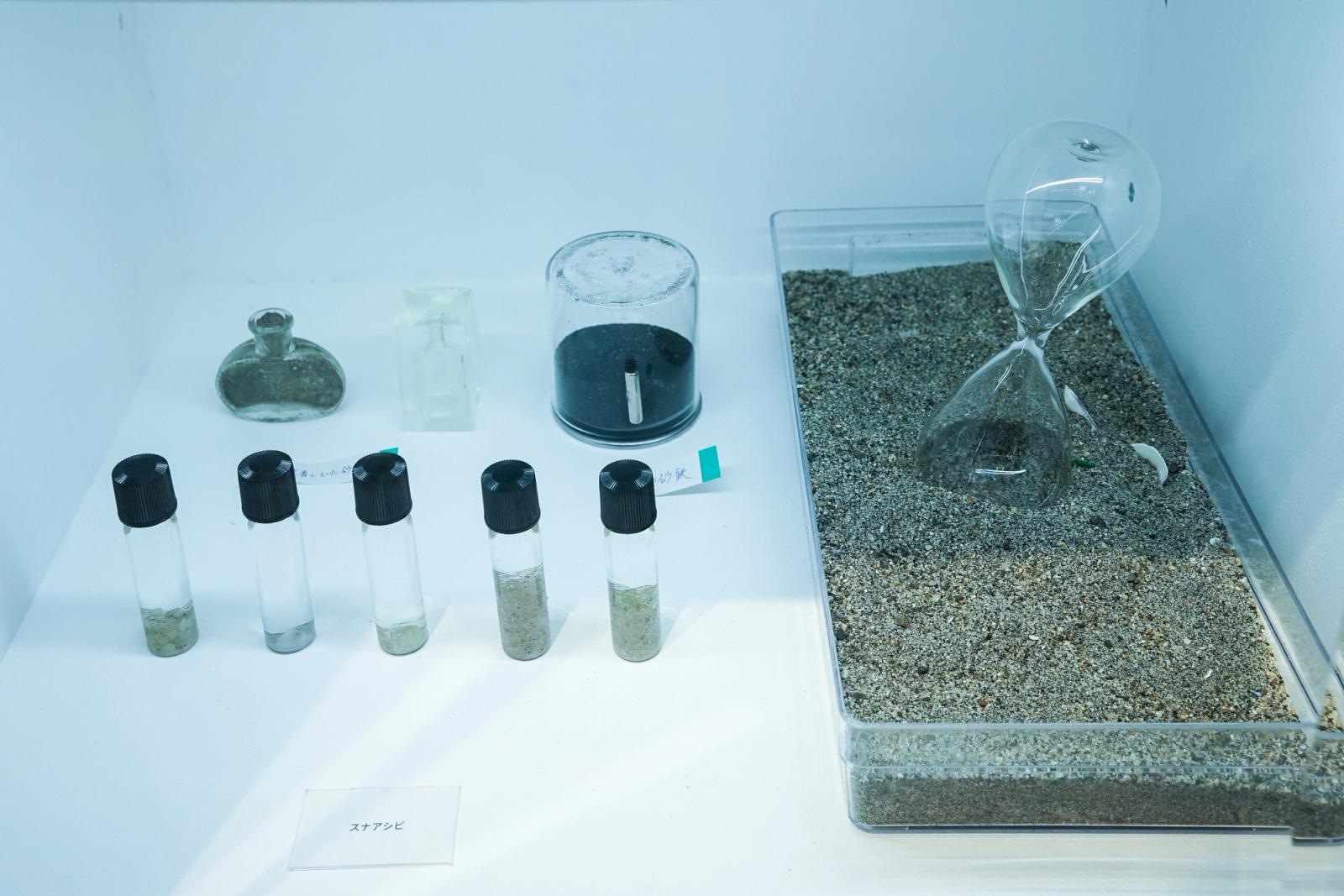
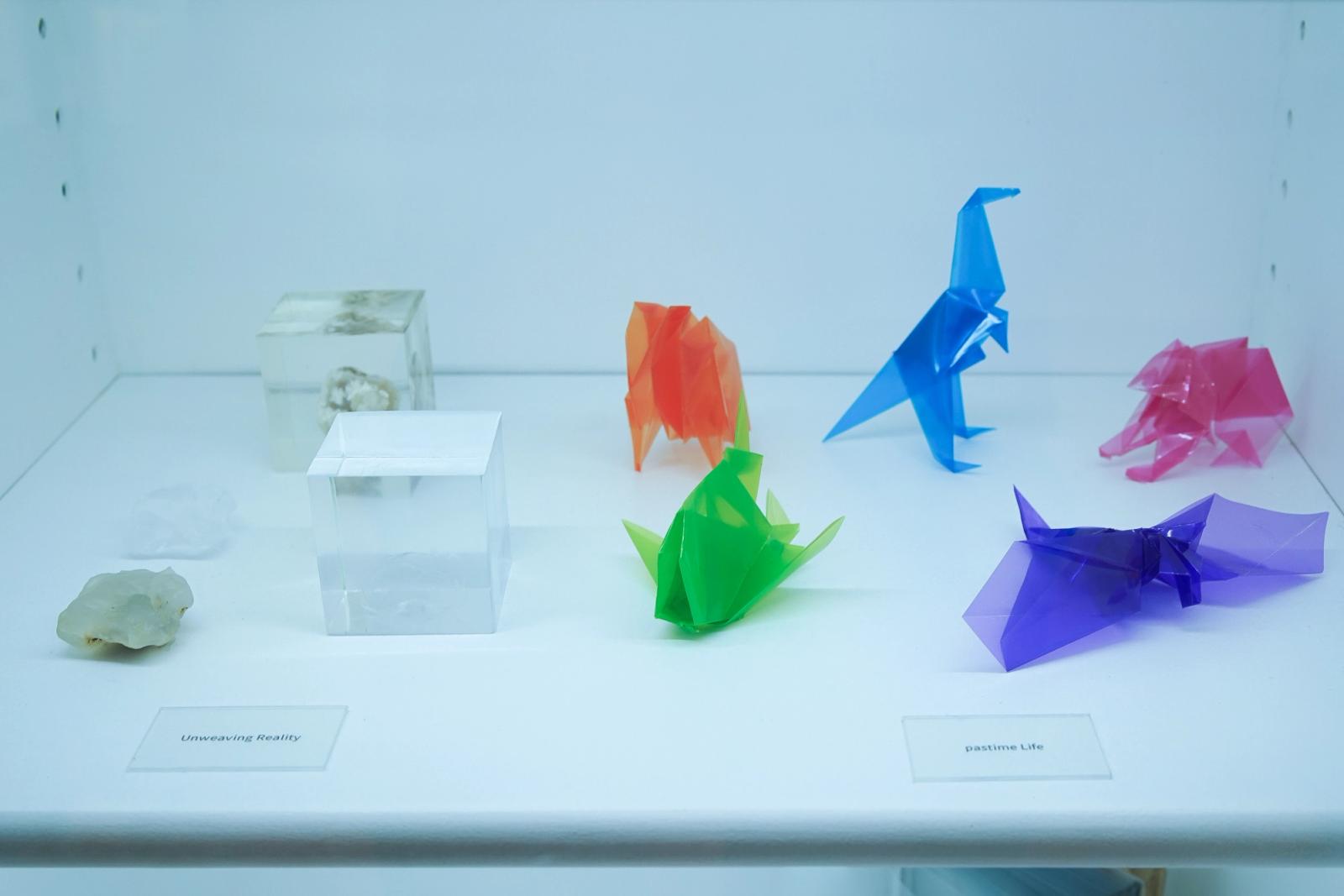
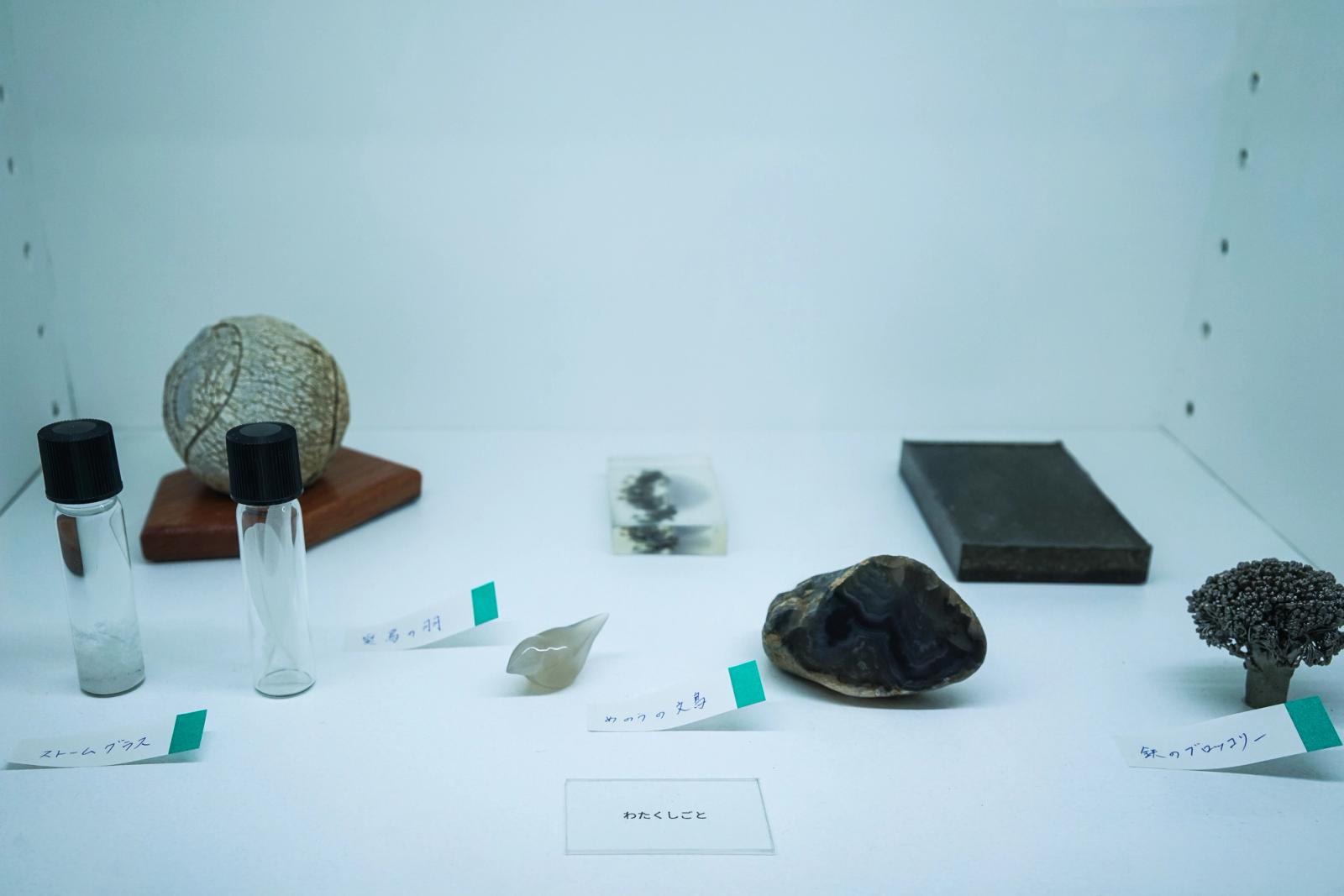
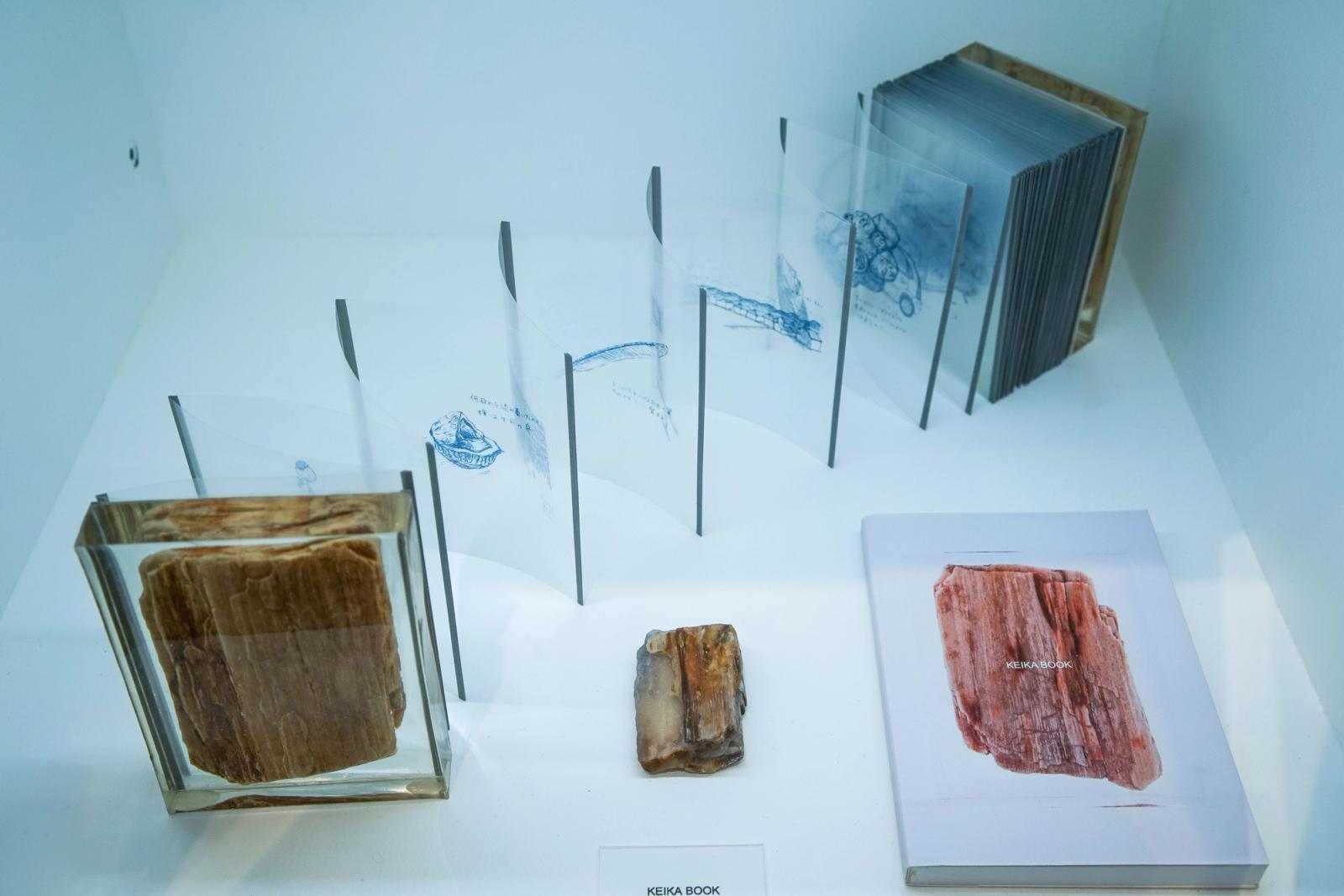
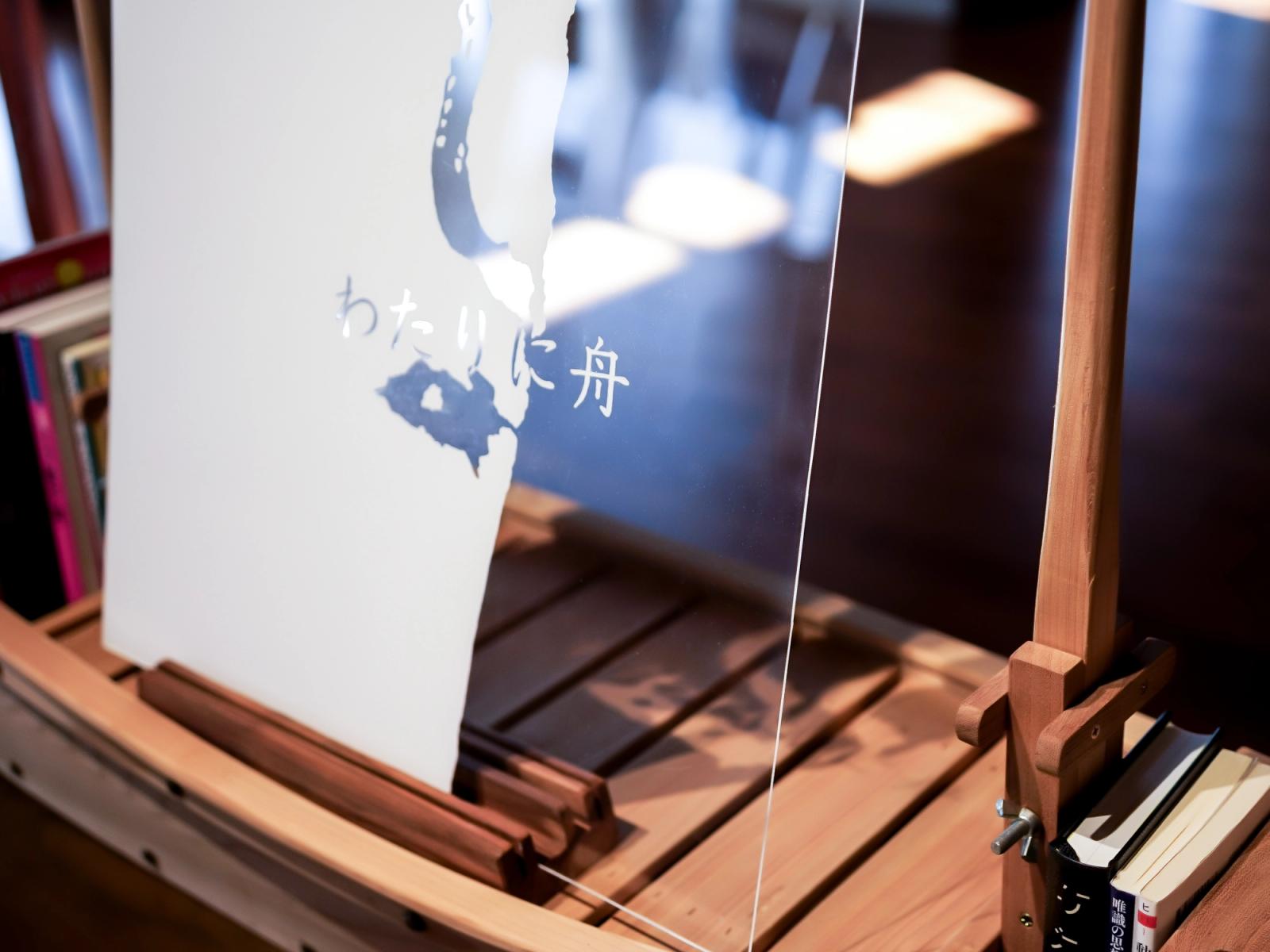
As these "timely boats" (Watari-ni-fune) increased, so did our collection of objects. To house them, we received a large cabinet from a local resident. Placed in the center of our living room—between the atelier and the bedroom—it began to fill with artifacts that served as evidence of our encounters. Observing this natural accumulation, the boundaries between "work/life," "record/artwork," and "creation/play" began to dissolve. We named this cabinet the "Watari-ni-fune Information Center."
The "artworks" shown in exhibitions are merely the tip of the iceberg. Beneath them lies a foundation built upon countless Watari-ni-fune experiences. Yet, the creative process is often introspective, and the time and form woven during that process are rarely shared. In the context of community revitalization, we believe it is far more important to share the traces of these journeys than the finished pieces themselves. This is because this "Information Center" is not a record of how I "revitalized" the region, but rather a collection of evidence showing how I was "revitalized" by the region.
Only by being "revitalized" as a human being by the land do we realize that our inner rhythm resonates with the rhythm of our home. The fierce waves of Arahama, the wind kicking up the sand, the ever-shifting shape of the Abukuma River mouth—these pulses are not happening in a world unrelated to us. That is why we allow ourselves to be "revitalized" by this land, seeing our home through our own existence.
We will continue to lose things. But in Watari, even what is lost becomes a new map, inviting us to the next destination. That power will never be washed away, held fast by the strong, deep, and flexible anchor of our homeland.
We are truly delighted that this "Watari-ni-fune Information Center" has moved from our home to a place where many people pass by. Whether they be good or bad, we look forward to sharing and waiting together for the "intangible things" that have stirred our hearts.
Watari-ni-fune Guides
Saya Kubota, Eiji Uozumi
(Text by Saya Kubota)
「地域おこし」という言葉の再解釈や、自己と風土が溶け合う感覚を大切に、展覧会や案内所の入り口に掲げるにふさわしい、格調高くも体温の宿る英語表現に翻訳しました。
On the Opening of the "Watari-ni-fune" Information Center
Three years have passed since we moved to Watari as members of the Local Revitalization Co-op. The Japanese term for revitalization, okosu, means to bring light to something hidden or to breathe new life into something that has faded. As newcomers to this unknown land, we have spent our days constantly questioning: what does it truly mean to "revitalize" a community through the act of creation?
Yet, remarkably, it did not take long for our "living" and "making" to merge into a single, flowing cycle. By simply walking through the town and following our intuition, we formed connections with people, objects, and places, which naturally led to the act of creation. These creations, in turn, guided us toward new encounters, leading back to making once more—a mysterious and beautiful circle. The time we spend thinking about Watari is no longer just for "work," "life," or "production." It has become a truly human time—a space to steady our breath and savor honest encounters with the world.
The reason these encounters brought such profound joy is perhaps because they were the exact opposite of how we typically "meet" things in the modern world. Unlike an active search where one sets a destination and moves efficiently according to a smartphone map, these were passive encounters—as if the world itself were coming toward us. One theory suggests the name "Watari" originates from the verb wataru (to cross), referring to crossing the Abukuma River. In a modern society that demands initiative, certainty, and planning, a small, unpredictable boat drifting in the current might be the truest form of "Watari"—a name that represents a dynamic state of "crossing." For us, struggling with how to approach creation as revitalization members, these experiences were truly Watari-ni-fune—the "perfect boat" appearing just when needed.
As these "timely boats" (Watari-ni-fune) increased, so did our collection of objects. To house them, we received a large cabinet from a local resident. Placed in the center of our living room—between the atelier and the bedroom—it began to fill with artifacts that served as evidence of our encounters. Observing this natural accumulation, the boundaries between "work/life," "record/artwork," and "creation/play" began to dissolve. We named this cabinet the "Watari-ni-fune Information Center."
The "artworks" shown in exhibitions are merely the tip of the iceberg. Beneath them lies a foundation built upon countless Watari-ni-fune experiences. Yet, the creative process is often introspective, and the time and form woven during that process are rarely shared. In the context of community revitalization, we believe it is far more important to share the traces of these journeys than the finished pieces themselves. This is because this "Information Center" is not a record of how I "revitalized" the region, but rather a collection of evidence showing how I was "revitalized" by the region.
Only by being "revitalized" as a human being by the land do we realize that our inner rhythm resonates with the rhythm of our home. The fierce waves of Arahama, the wind kicking up the sand, the ever-shifting shape of the Abukuma River mouth—these pulses are not happening in a world unrelated to us. That is why we allow ourselves to be "revitalized" by this land, seeing our home through our own existence.
We will continue to lose things. But in Watari, even what is lost becomes a new map, inviting us to the next destination. That power will never be washed away, held fast by the strong, deep, and flexible anchor of our homeland.
We are truly delighted that this "Watari-ni-fune Information Center" has moved from our home to a place where many people pass by. Whether they be good or bad, we look forward to sharing and waiting together for the "intangible things" that have stirred our hearts.
Watari-ni-fune Guides
Saya Kubota, Eiji Uozumi
(Text by Saya Kubota)
- Period
- 2024
- Work for
- 宮城県亘理町地域おこし協力隊事業 亘理町役場 インスタレーション展示作品
- Location
- Miyagi, Japan
- Category
- Art Project
- Team
- Eiji Uozumi + Saya Kubota
- Material
- Ship model, resin, silicified wood, sand, hourglass, and mixed media