
Watari ni Fune
1 / 5
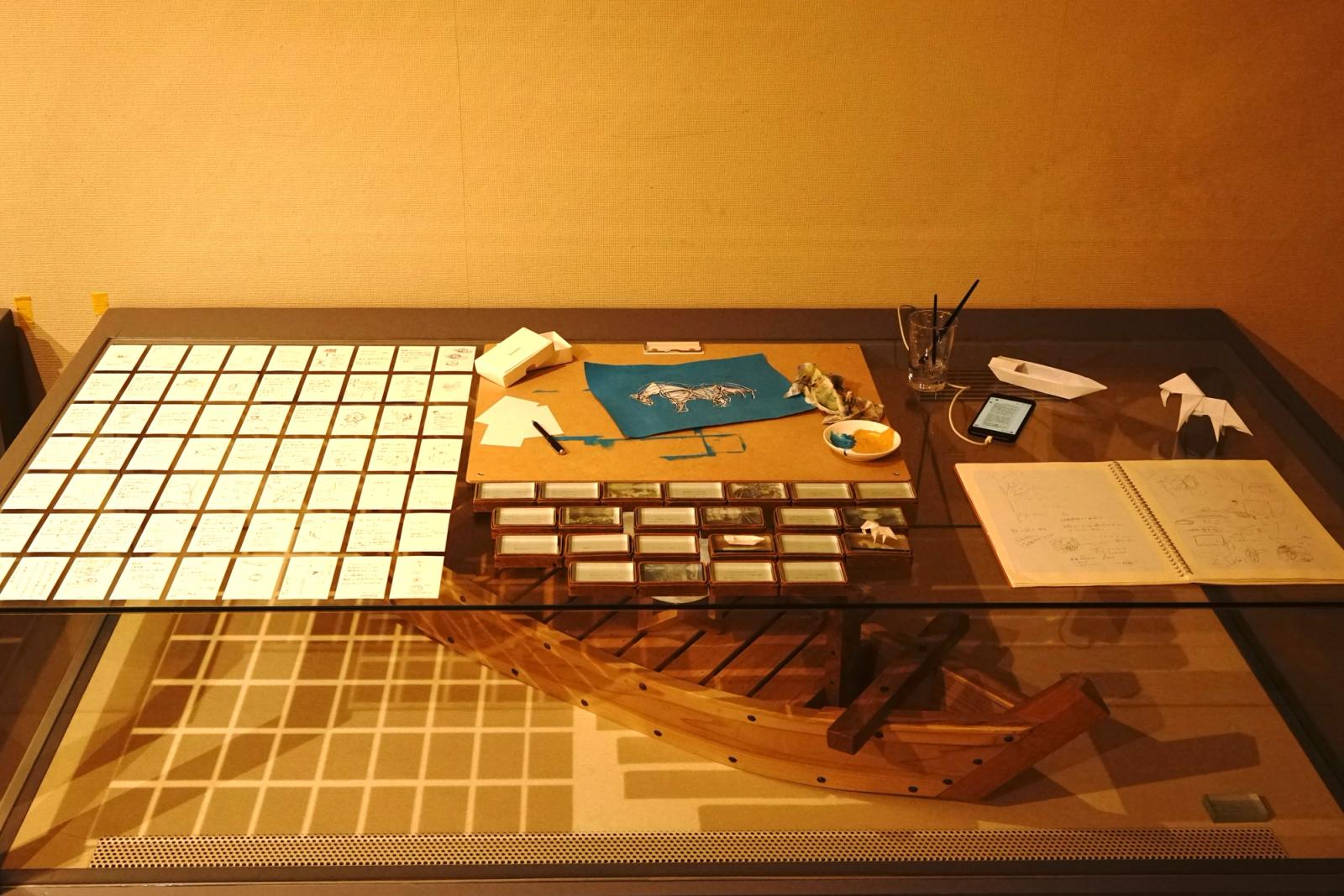
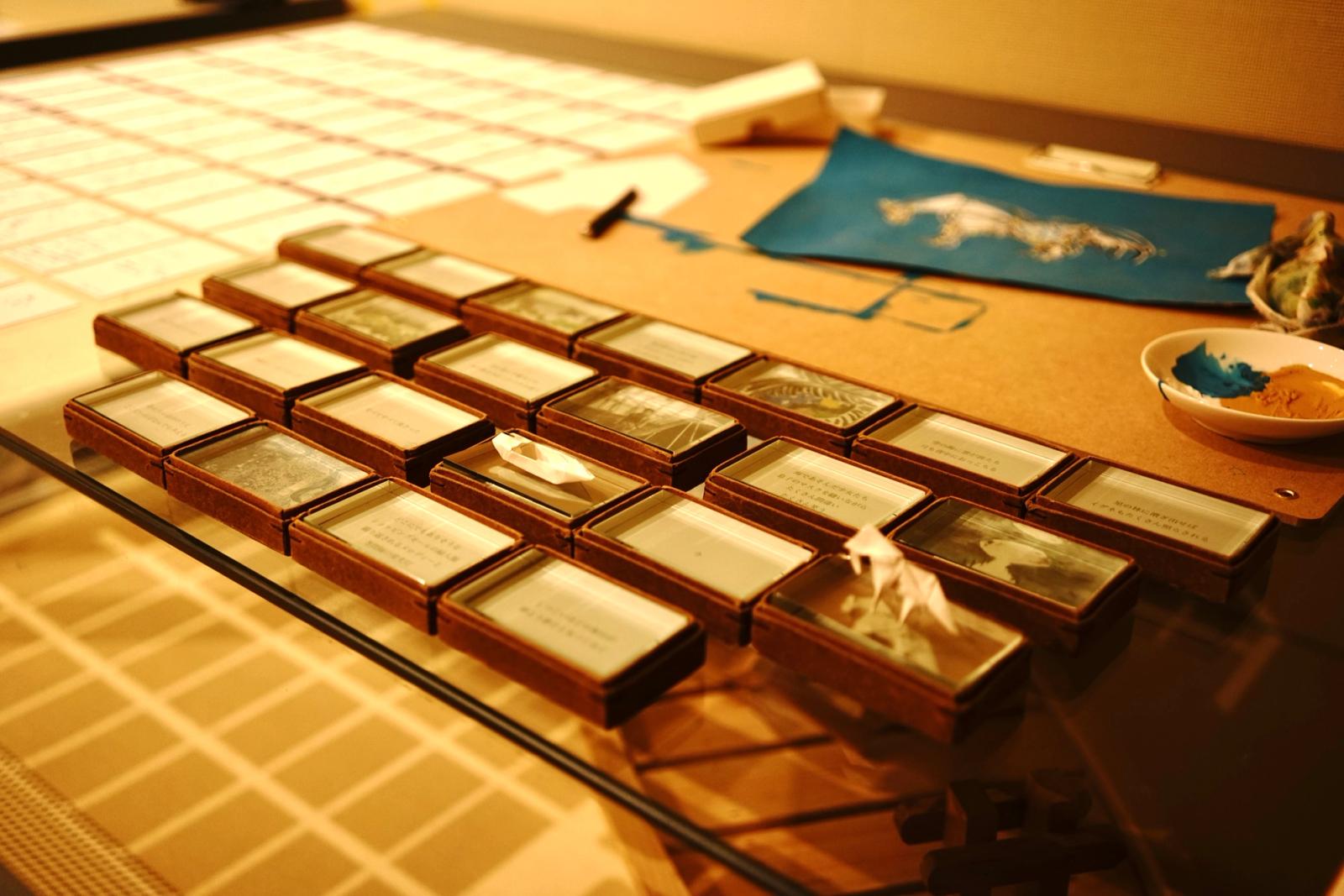
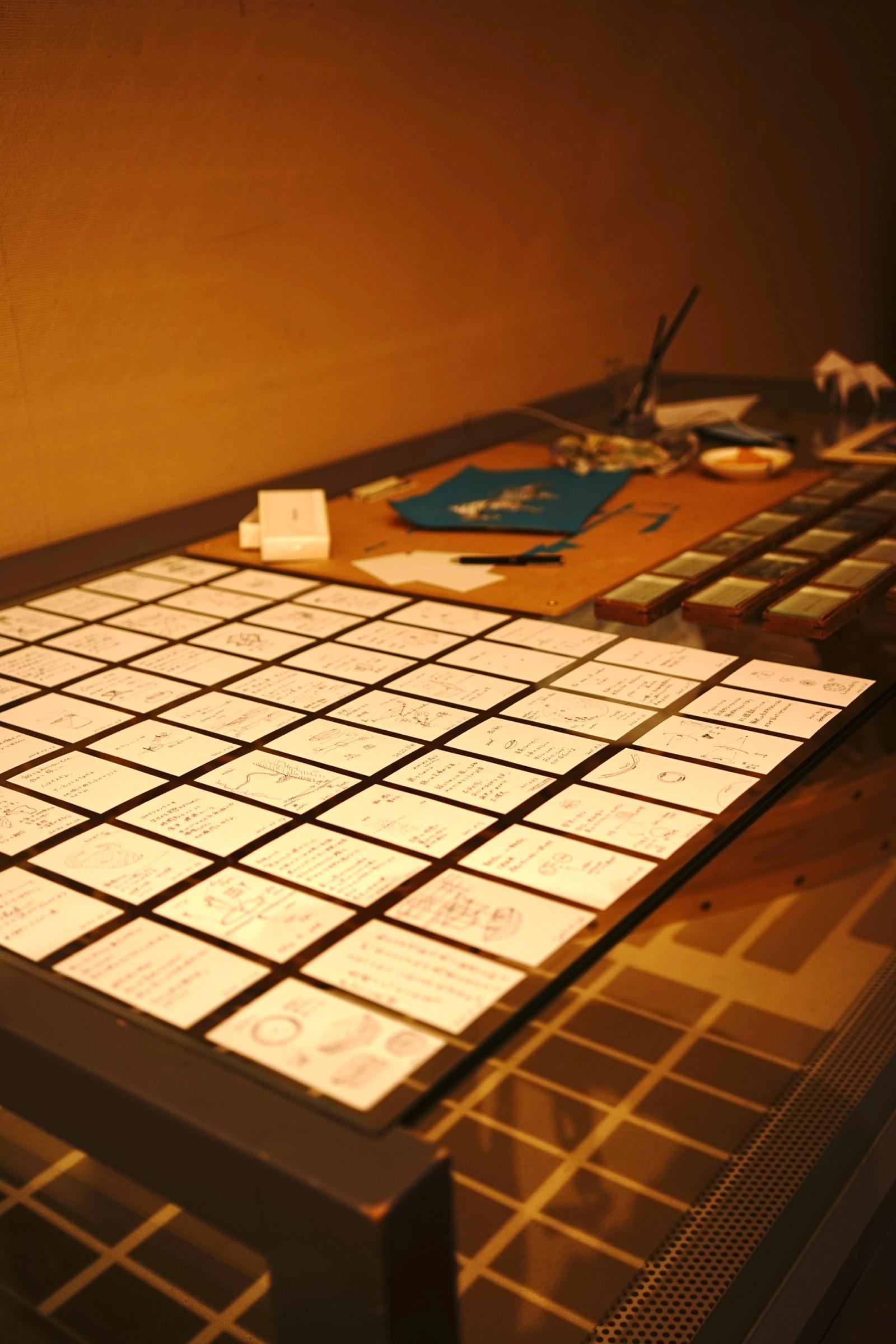
After our participation in the project was confirmed, Saya Kubota and I began extensive research to grasp the holistic picture of the region. We delved into the legal restrictions around Toriumi Park, local ordinances, the geographical features of Watari, and its deep historical background. While we gathered qualitative data from literature and the web, we also conducted repeated interviews with the town's tourism department and local history museum. Through these encounters, we were introduced to residents who were experts in our areas of interest, sparking a series of heartfelt exchanges that evolved into genuine friendships. To preserve our experiences in Watari, Kubota began writing The Watari Residency Demolition Diary, while I compiled Personal Card Memos—a collection of evocative words and fleeting thoughts captured on individual cards.
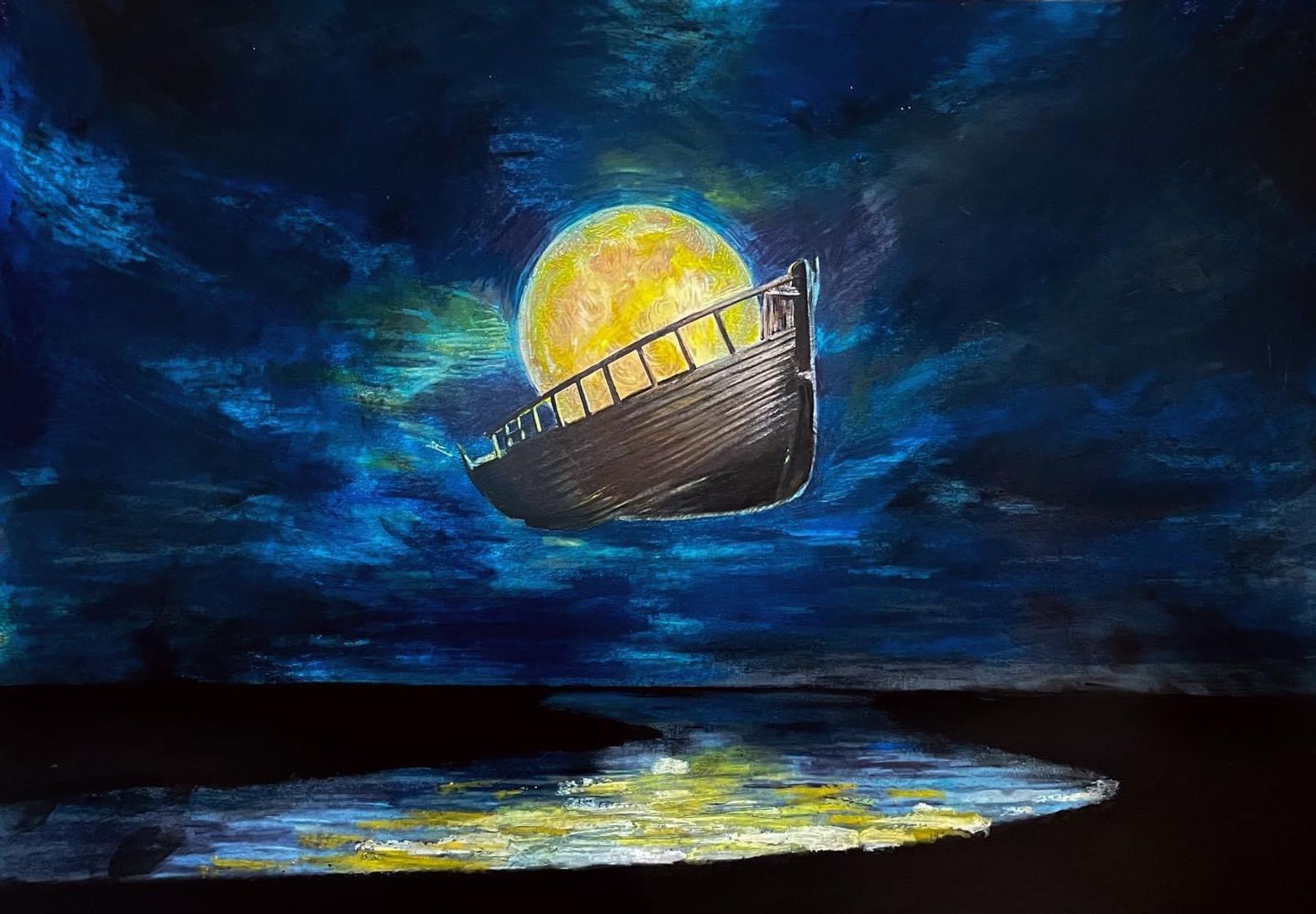
These scattered, miscellaneous reflections eventually coalesced into a single narrative within Kubota’s mind, triggered by a specific encounter. Inspired by the stories told by Mr. Sato, a former shipwright who once handcrafted wooden boats in Watari, she found herself haunted by an image that felt like a waking dream while walking through the town. She captured this vision through painting and poetry. When she casually posted the artwork on Instagram as a progress report, she received an unexpected message from a resident named Ms. Fukushima. Ms. Fukushima, who had lost her husband in the Great East Japan Earthquake tsunami, was struck by the uncanny resemblance between Kubota’s painting and a scene from her own dreams. At that moment, our deep immersion into the heart of Watari and the inner world of a long-time resident converged through a shared space, overlapping without a word of introduction. Just as dreams act as an unconscious "defragging" of the brain, perhaps those who live in and immerse themselves in the same land can share a collective dream. We realized that through our work, we might be able to convey this ambiguous, delicate "sparkle."
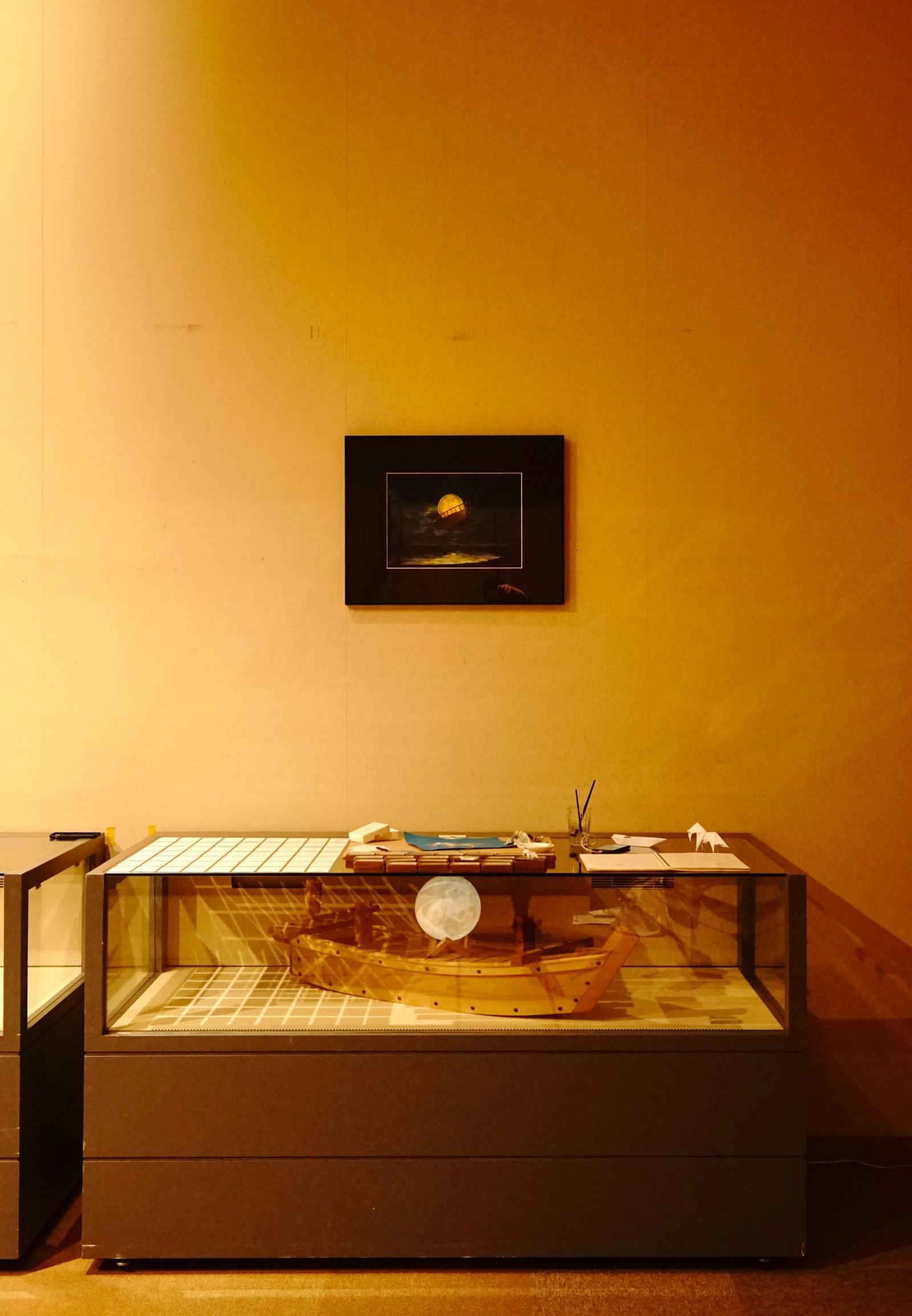
The "sparkle" we spun together with Watari is undoubtedly a "sparkle" for someone else as well. In this land of Watari, we strive to create works that feel like a "timely rescue" (Watari-ni-fune) for those who encounter them. With this resolve, we created an installation that brought the production process itself into the gallery, allowing the townspeople to re-experience the journey that led us here. When we shared the story behind this exhibition with Mr. Sato and Ms. Fukushima, we discovered they had once been neighbors and acquaintances. However, the earthquake had forced them to relocate, and they had lost touch. This led to a dialogue organized by a local newspaper, bringing the four of us together to discuss the past and learn more about Watari. As this was our first exhibition in the town, we used it as a platform for communication—to show what an artist does and how they engage with a community. Beyond any complex theories, if the residents could find just one painting they liked or one word that resonated with them, that in itself would become their "Watari-ni-fune"—the boat they needed to cross the water.
These scattered, miscellaneous reflections eventually coalesced into a single narrative within Kubota’s mind, triggered by a specific encounter. Inspired by the stories told by Mr. Sato, a former shipwright who once handcrafted wooden boats in Watari, she found herself haunted by an image that felt like a waking dream while walking through the town. She captured this vision through painting and poetry. When she casually posted the artwork on Instagram as a progress report, she received an unexpected message from a resident named Ms. Fukushima. Ms. Fukushima, who had lost her husband in the Great East Japan Earthquake tsunami, was struck by the uncanny resemblance between Kubota’s painting and a scene from her own dreams. At that moment, our deep immersion into the heart of Watari and the inner world of a long-time resident converged through a shared space, overlapping without a word of introduction. Just as dreams act as an unconscious "defragging" of the brain, perhaps those who live in and immerse themselves in the same land can share a collective dream. We realized that through our work, we might be able to convey this ambiguous, delicate "sparkle."
The "sparkle" we spun together with Watari is undoubtedly a "sparkle" for someone else as well. In this land of Watari, we strive to create works that feel like a "timely rescue" (Watari-ni-fune) for those who encounter them. With this resolve, we created an installation that brought the production process itself into the gallery, allowing the townspeople to re-experience the journey that led us here. When we shared the story behind this exhibition with Mr. Sato and Ms. Fukushima, we discovered they had once been neighbors and acquaintances. However, the earthquake had forced them to relocate, and they had lost touch. This led to a dialogue organized by a local newspaper, bringing the four of us together to discuss the past and learn more about Watari. As this was our first exhibition in the town, we used it as a platform for communication—to show what an artist does and how they engage with a community. Beyond any complex theories, if the residents could find just one painting they liked or one word that resonated with them, that in itself would become their "Watari-ni-fune"—the boat they needed to cross the water.
- Period
- 2022
- Work for
- 宮城県亘理町地域おこし協力隊事業 亘理町立郷土資料館 「アーティストから見た亘理~アートで始まるまちづくり~」 展示作品
- Location
- Miyagi, Japan
- Category
- Art Project
- Team
- Eiji Uozumi + Saya Kubota
- Material
- Ship model, pencils, paper, mixed media